introduction: when budgeting for hosting servers for enterprises, hong kong hosting servers are often given priority due to their low latency and convenient international exports. this article conducts a comparative analysis from the perspective of cost drivers, applicable scenarios of different configuration types, and long-term costs to help companies formulate reasonable budgets without disclosing specific prices.
cost is not a single value and is affected by multiple factors: hardware specifications (cpu, memory, storage type and capacity), network bandwidth and export quality, number of public ips, computer room level and power redundancy, sla and technical support levels, and whether to choose hosting or maintenance services. the proportions of these items in the budget vary significantly.
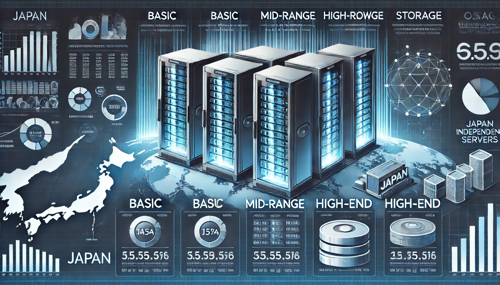
different configurations cater to different business scenarios: the basic type is suitable for lightweight applications and development testing; the mid-level enterprise type is suitable for regular business and medium-traffic websites; the high-performance type supports large-scale databases, high concurrency or computing-intensive tasks. the cost driving points of each type of configuration are different, and the cost-effectiveness needs to be judged based on the usage scenario.
basic models usually have lower configurations and are suitable for lightweight websites, test environments, or small-scale applications. its advantages include low initial investment and low resource elasticity, but it can easily become a bottleneck when traffic peaks or resources suddenly increase. it can be used as a pilot or temporary expansion plan during the corporate budget phase.
the mid-level enterprise model provides a balanced combination of cpu, memory and storage for production environments and medium traffic requirements, and is suitable for e-commerce, enterprise portals and business systems. its cost is a compromise between stability and performance, and it is suitable for enterprises that seek long-term stable operations but do not pursue extreme performance.
the high-performance type is oriented to high concurrency, big data or computing-intensive services, and usually uses more cpu cores, larger memory and high-speed storage, and is equipped with higher network bandwidth and redundant design. this type of configuration focuses on performance and stability and is suitable for core services or applications that are sensitive to response time.
in addition to hardware and bandwidth base fees, enterprises should consider traffic overage fees, backup and disaster recovery fees, ip and security protection services, monitoring and log storage costs, operation and maintenance, and third-party software license fees. these long-term ongoing expenses often have a greater impact on the annual budget and should be set aside in proportion in advance.
evaluate business peak and normal traffic, key performance indicators (response time, concurrency), future growth expectations, and disaster recovery needs. prioritize necessary resources and flexible purchase items, and adopt a phased expansion strategy and capacity estimation to optimize initial investment while ensuring availability.
when selecting a vendor, pay attention to contract terms, sla metrics, bandwidth peaking strategies, and flexible upgrade paths. it is recommended to strive for a trial or short-term contract to evaluate actual performance, clarify failure response and compensation mechanisms, and conduct price and configuration optimization negotiations based on actual usage data when renewing the contract.

summary: the cost of hosting servers in hong kong is determined by the configuration type, network and operation and maintenance services. when preparing budgets, enterprises should focus on business needs, distinguish between necessary and optional options, and take into account both short-term investment and long-term operating costs. a phased deployment and scalability approach is recommended to optimize overall cost while meeting performance.
- Latest articles
- Troubleshooting guide: Checklist of steps to figure out why a Hong Kong VPS can’t access websites in Hong Kong
- Risk Warning: Hidden Costs and Limitations of Free Cloud Server Services in Hong Kong
- How to evaluate the cache hit rate performance of Taiwan’s CDN CN2 in different regions
- Which VPS provider in Malaysia is the best? A comprehensive comparison based on price-performance and after-sales support
- Detailed Explanation of Factors to Consider When Choosing a Data Center in Singapore: The Impact of Singapore CN2 VPS on Access Speed
- Where are Malaysia’s WeChat servers located? Geographical factors that affect message delivery speed
- Advantages of Hong Kong’s native IPs in supporting cross-border work and distance education at airports
- Risk Warning: How to Avoid Contract Traps and Hidden Fees When There Are Activities at Hong Kong Station Groups
- Top Choice for Small and Medium-sized Enterprises: Strategies for Selecting Hong Kong VPS and Server Hosting Providers
- Complete List of My World German Server Names, Analysis of the Best Options, and Recommendation Guide
- Popular tags
-

detailed explanation of the hong kong native ip purchase process and teach you how to operate it step by step
this article introduces the purchase process of hong kong native ip in detail to help users master the operation skills step by step to ensure a smooth purchase. -

how to build a hong kong native ip and teach you how to avoid common problems with bandwidth and port restrictions
introduce how to build hong kong native ip, and provide technical strategies and operation and maintenance suggestions to avoid bandwidth and port restrictions, including resource selection, network architecture, bandwidth detection, port mapping, cgnat response and compliance security points. -
advantages and selection guide of hong kong’s non-refundable computer rooms
this article discusses in detail the advantages and selection guide of hong kong’s non-refundable data centers, which is suitable for enterprises and individuals to refer to when choosing a data center.